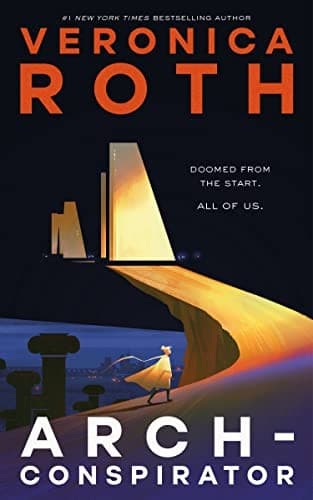
Veronica Roth’s *Arch-Conspirator* reimagines the classic tale of Antigone in a dystopian future where humanity’s survival hinges on a genetic Archive. Antigone, fueled by rage after her parents’ deaths, confronts her power-hungry uncle Kreon, who seeks to control her and her siblings in a deceptive sanctuary. Her defiance challenges his authority in a world on the brink of collapse.
Owned
No reviews yet
Owned
Veronica Roth’s *Arch-Conspirator* reimagines the classic tale of Antigone in a dystopian future where humanity’s survival hinges on a genetic Archive. Antigone, fueled by rage after her parents’ deaths, confronts her power-hungry uncle Kreon, who seeks to control her and her siblings in a deceptive sanctuary. Her defiance challenges his authority in a world on the brink of collapse.
About
Details
In this gripping and atmospheric reimagining of Antigone , #1 New York Time s bestselling author Veronica Roth reaches back to the root of legend and delivers a world of tomorrow both timeless and unexpected. “I’m cursed, haven’t you heard?” Outside the last city on Earth, the planet is a wasteland. Without the Archive, where the genes of the dead are stored, humanity will end. Antigone’s parents—Oedipus and Jocasta—are dead. Passing into the Archive should be cause for celebration, but with her...
What's Inside
will contain mild spoilers
Sexual content
AI
Brief discussions of reproductive biology and sex; no on-page scenes. Themes of reproductive oppression implying coercion; no explicit assaults depicted.
Violence & gore
AI
Depictions of battles, sibling deaths by mutual combat, and rebellion violence; some graphic elements but not pervasive.
Profanity
AI
Infrequent strong language including one f-bomb and a few s-words.
Substance use
AI
No substance use depicted.
LGBTQ+ Rep.
AI
No LGBTQIA+ representation.
Religious content
AI
Themes of ethical rites replacing burial with genetic extraction; explores religious beliefs and devotion to family legacy.
Magic & witchcraft
AI
No witchcraft or occult elements.
Occult / demonology
AI
No evidence found in available sources.
Political content
AI
Central themes of tyranny, revolution, reproductive oppression, female autonomy, and abuse of power in a dystopian society.
Self-harm / suicide
AI
Implied suicidal ideation and acts mirroring the original tragedy; recurring motif in character fates.
Abuse & suffering
AI
Familial conflict, tyrannical rule, and systemic suffering including loss of bodily autonomy and deceased parents. Themes of reproductive oppression implying coercion; no explicit assaults depicted.
Other
AI
No information found