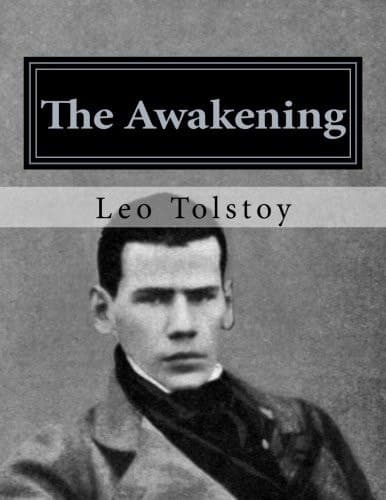
A nobleman jurors a trial and recognizes the accused prostitute as the maid he once seduced and abandoned, sparking his moral crisis and quest for redemption.
Owned
No reviews yet
Owned
A nobleman jurors a trial and recognizes the accused prostitute as the maid he once seduced and abandoned, sparking his moral crisis and quest for redemption.
About
Details
Lev Nikolayevich Tolstoy (9 September [O.S. 28 August] 1828 - 20 November [O.S. 7 November] 1910), usually referred to in English as Leo Tolstoy, was a Russian writer who is regarded as one of the greatest authors of all time.Born to an aristocratic Russian family in 1828, he is best known for the novels War and Peace (1869) and Anna Karenina (1877), often cited as pinnacles of realist fiction. He first achieved literary acclaim in his twenties with his semi-autobiographical trilogy, Childhood, ...
What's Inside
will contain mild spoilers
Sexual content
AI
Implied past affair and mentions of prostitution; no on-page explicit scenes. Past seduction with power imbalance leading to woman's downfall; central to protagonist's guilt.
Violence & gore
AI
Brief depictions of prison hardships and physical suffering, not graphic.
Profanity
AI
No profanity present.
Substance use
AI
Occasional mentions of alcohol use in social and brothel settings.
LGBTQ+ Rep.
AI
No LGBTQIA+ representation.
Religious content
AI
Central themes of Christian moral awakening, redemption, and spiritual transformation drive the narrative.
Magic & witchcraft
AI
No witchcraft or occult elements.
Occult / demonology
AI
No evidence found in available sources.
Political content
AI
Strong critique of judicial injustice, prison system, and social inequality; promotes anarcho-pacifist and reformist views.
Self-harm / suicide
AI
No self-harm or suicide depicted.
Abuse & suffering
AI
Systemic suffering in prostitution, unjust imprisonment, and social oppression; emotional and physical abuse implied. Past seduction with power imbalance leading to woman's downfall; central to protagonist's guilt.
Other
AI
No information found