Drama
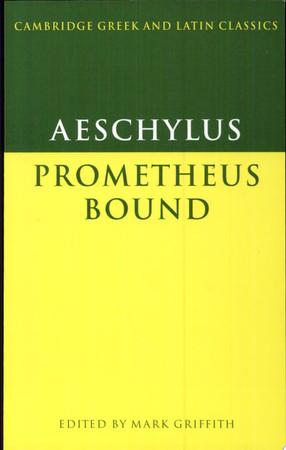
Prometheus Bound (Greek and Latin Classics)
320 pages
THE SHORT VERSION
Aeschylus’s tragedy of Prometheus chained by Zeus for giving fire to humanity, probing tyranny, defiance, and suffering.
Owned
Owned
THE SHORT VERSION
Aeschylus’s tragedy of Prometheus chained by Zeus for giving fire to humanity, probing tyranny, defiance, and suffering.
About
Details
The myth of fire stolen from the gods appears in many pre-industrial societies. In Greek culture Prometheus the fire-stealer figures prominently in the poems of Hesiod, but in Prometheus Bound Hesiod's morality tale has been transformed into a drama of tragic tone and proportions. In the introduction, Mark Griffith examines how the dramatist has achieved this transformation, looking at the play from all angles - plot and characters, dramatic technique, style and metre. He includes a short sectio...
What's Inside
will contain mild spoilers
Sexual content
AI
Zeus’s sexual pursuit of Io is referenced; no explicit sexual content
Violence & gore
AI
Prometheus nailed and chained to a rock; torture central; eagle eating liver foretold
Profanity
AI
No profanity present
Substance use
AI
No substance use depicted
LGBTQ+ Rep.
AI
No LGBTQIA+ representation present
Religious content
AI
Olympian gods drive the plot; divine justice, power, and worship themes
Magic & witchcraft
AI
Mythic prophecy and Io’s divine transformation; not a fantasy magic system
Occult / demonology
AI
No real-world occult content present
Political content
AI
Central allegory of tyranny, resistance to absolute power, and justice
Self-harm / suicide
AI
No self-harm or suicide depicted
Abuse & suffering
AI
Sustained on-stage torture of Prometheus; Io’s persecution and coercion