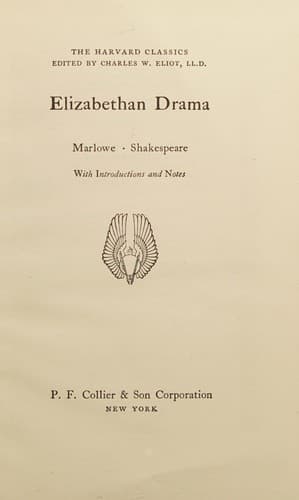
A collection of Shakespeare's works showcasing Elizabethan drama, exploring themes of power, love, and human nature.
Owned
No reviews yet
Owned
A collection of Shakespeare's works showcasing Elizabethan drama, exploring themes of power, love, and human nature.
About
Details
Moors have been ill portrayed in English drama. Their image in the literary dramatic works that were produced during the Elizabethan era is negative. Most of plays in which a Moorish figure plays either a subsidiary or central role do precisely address a certain discourse on particular features that differentiate Moors from white Europeans. Three major features are highlighted recurrently as inherently characteristic of the character of the Moor. He is seen as being physically deformed, black, a...
What's Inside
will contain mild spoilers
Sexual content
AI
Moderate sexual themes; some suggestive dialogue and implied relationships in plays like Romeo and Juliet. Rare implied sexual threats or coercion in some plays; not graphically depicted.
Violence & gore
AI
Frequent violence in tragedies like Macbeth; graphic battle scenes and murders depicted on stage.
Profanity
AI
Mild profanity and insults; language reflects Elizabethan era but is not severe.
Substance use
AI
Occasional references to alcohol in social contexts; not a central theme.
LGBTQ+ Rep.
AI
Minor implied themes; cross-dressing in comedies like Twelfth Night may suggest fluidity.
Religious content
AI
Recurring Christian undertones reflecting Elizabethan culture; occasional clergy and rituals.
Magic & witchcraft
AI
Magic and supernatural elements in plays like Macbeth with witches; framed as ominous.
Occult / demonology
AI
No evidence found in available sources.
Political content
AI
Strong political themes in history plays like Richard III; explores power and intrigue.
Self-harm / suicide
AI
Suicide depicted in plays like Romeo and Juliet; emotional ideation in Hamlet.
Abuse & suffering
AI
Emotional and physical suffering in tragedies; systemic cruelty in historical contexts. Rare implied sexual threats or coercion in some plays; not graphically depicted.
Other
AI
No information found