Anthology
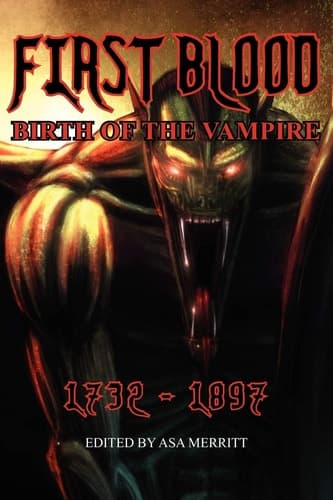
First Blood : Birth of the Vampire
2011·554 pages
A chilling anthology tracing the vampire myth from 1732 to Bram Stoker's Dracula, exploring horror's evolution.
Owned
No reviews yet
Owned
A chilling anthology tracing the vampire myth from 1732 to Bram Stoker's Dracula, exploring horror's evolution.
About
Details
"After it had been reported that in the village of Medvegia the so-called vampires had killed some people by sucking their blood, I was, by high degree of a local Honorable Supreme Command, sent there to investigate the matter thoroughly along with officers detailed for that purpose..." So begins the 1732 military report by an Austrian official with respect to an incident he had been sent to investigate. It is also the first piece in this collection that traces the development of the myt...
What's Inside
will contain mild spoilers
Sexual content
AI
Moderate romantic themes with some implied sexual content; fade-to-black scenes in Dracula and Carmilla.
Violence & gore
AI
Frequent violent scenes with blood-sucking and death; graphic depictions in Dracula and Varney.
Profanity
AI
Minimal strong language; occasional mild oaths in historical context.
Substance use
AI
Brief mentions of alcohol use in social settings; not central.
LGBTQ+ Rep.
AI
Subtextual lesbian themes in Carmilla; not explicit but notable.
Religious content
AI
Recurring Christian symbolism and rituals, especially in Dracula with crosses and holy water.
Magic & witchcraft
AI
Minor supernatural elements tied to vampirism; not fantasy magic.
Occult / demonology
AI
Central themes of vampirism with demonic undertones; rituals and supernatural evil in Dracula.
Political content
AI
Minor cultural commentary on fear of the unknown and foreignness in Dracula.
Self-harm / suicide
AI
Brief mentions of despair leading to implied self-destruction in some stories.
Abuse & suffering
AI
Themes of coercion and predation through vampirism; emotional and physical suffering depicted.
Other
AI
No information found.