AdventureYoung Adult
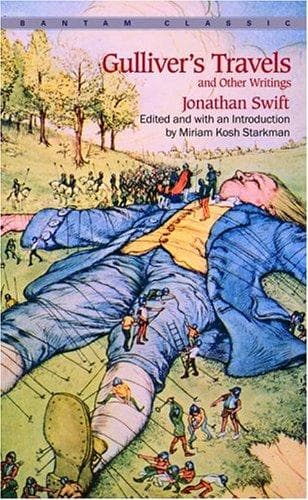
Satirical voyages of Lemuel Gulliver to fantastical lands, plus Swift’s sharp essays skewering politics, religion, and human folly.
Owned
No reviews yet
Owned
Satirical voyages of Lemuel Gulliver to fantastical lands, plus Swift’s sharp essays skewering politics, religion, and human folly.
About
Details
A parody of traveler’s tales and a satire of human nature, “Gulliver’s Travels” is Jonathan Swift’s most famous work which was first published in 1726. An immensely popular tale ever since its original publication, “Gulliver’s Travels” is the story of its titular character, Lemuel Gulliver, a man who loves to travel. A series of four journeys are detailed in which Gulliver finds himself in a number of amusing and precarious situations. In the first voyage, Gulliver is imprisoned by a race of tin...
What's Inside
will contain mild spoilers
Sexual content
AI
Mild crude bodily humor; awkward intimacy with giant maids in Brobdingnag
Violence & gore
AI
Wars, executions, shipwrecks; Yahoo brutality and satirical war horrors
Profanity
AI
Occasional archaic oaths; crude references to bodily functions
Substance use
AI
Social drinking among sailors and at various courts
LGBTQ+ Rep.
AI
No LGBTQ+ representation present
Religious content
AI
Religious satire central to essays; clergy and church heavily critiqued
Magic & witchcraft
AI
Fantastical lands with giants, tiny people, flying island, talking horses
Occult / demonology
AI
Necromancers summon spirits of the dead on Glubbdubdrib
Political content
AI
Pervasive satire of politics, colonialism, society, and human nature
Self-harm / suicide
AI
No self-harm or suicide content present
Abuse & suffering
AI
Captivity and degradation; satirical proposal to eat poor children
Other
AI
No information found