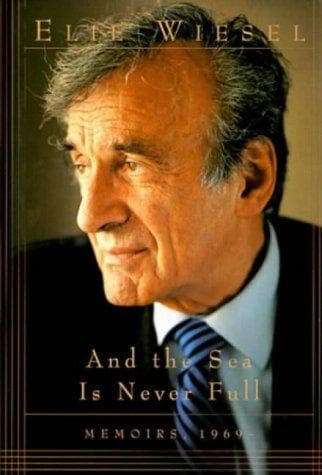
Elie Wiesel, at forty, emerges as a fervent advocate for Holocaust survivors and the oppressed worldwide in his memoir. He engages with global leaders, confronts injustices from the Soviet Union to South Africa, and challenges Holocaust deniers while supporting key figures and causes. His journey, marked by the Nobel Peace Prize, reflects a relentless commitment to bearing witness and fostering change.
Owned
No reviews yet
Owned
Elie Wiesel, at forty, emerges as a fervent advocate for Holocaust survivors and the oppressed worldwide in his memoir. He engages with global leaders, confronts injustices from the Soviet Union to South Africa, and challenges Holocaust deniers while supporting key figures and causes. His journey, marked by the Nobel Peace Prize, reflects a relentless commitment to bearing witness and fostering change.
About
Details
As this concluding volume of his moving and revealing memoirs begins, Elie Wiesel is forty years old, a writer of international repute. Determined to speak out more actively for both Holocaust survivors and the disenfranchised everywhere, he sets himself a challenge: "I will become militant. I will teach, share, bear witness. I will reveal and try to mitigate the victims' solitude." He makes words his weapon, and in these pages we relive with him his unstinting battles. We see him meet with worl...
More In This Series
View all books in this seriesWhat's Inside
will contain mild spoilers
Sexual content
AI
Brief mentions of sexual activity among prisoners in concentration camps. Fleeting references to sexual violence and coercion in camp settings.
Violence & gore
AI
Graphic, pervasive depictions of Holocaust atrocities including beatings, starvation, executions, and mass death in concentration camps.
Profanity
AI
No profanity or strong language.
Substance use
AI
No substance use depicted.
LGBTQ+ Rep.
AI
No LGBTQIA+ representation.
Religious content
AI
Central themes of Jewish faith, rituals, loss of belief amid suffering, and theological reflections on evil and God.
Magic & witchcraft
AI
No witchcraft or occult elements.
Occult / demonology
AI
No evidence found in available sources.
Political content
AI
Messaging on antisemitism, human rights, Holocaust remembrance, and critiques of prejudice and indifference.
Self-harm / suicide
AI
Recurring ideation and mentions of despair leading to suicidal thoughts among prisoners; some attempts described.
Abuse & suffering
AI
Extreme systemic cruelty, including child separation, forced labor, torture, and dehumanization in Nazi concentration camps. Fleeting references to sexual violence and coercion in camp settings.
Other
AI
No information found