Adventure
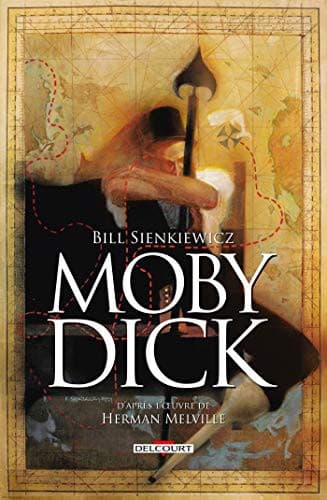
Moby-Dick
1951·452 pages
A whaling captain's obsessive hunt for the great white whale Moby Dick explores themes of vengeance and the unknown.
Owned
No reviews yet
Owned
A whaling captain's obsessive hunt for the great white whale Moby Dick explores themes of vengeance and the unknown.
About
Details
"Command the murderous chalices! Drink ye harpooners! Drink and swear, ye men that man the deathful whaleboat's bow -- Death to Moby Dick!" So Captain Ahab binds his crew to fulfil his obsession -- the destruction of the great white whale. Under his lordly but maniacal command the Pequod's commercial mission is perverted to one of vengeance. To Ahab, the monster that destroyed his body is not a creature, but the symbol of "some unknown but still reasoning thing." Uncowed by natural disasters, il...
What's Inside
will contain mild spoilers
Sexual content
AI
Minor implied sensuality and homoerotic undertones in male friendships; no explicit scenes.
Violence & gore
AI
Frequent graphic depictions of whaling, including blood, dismemberment, and animal slaughter; intense shipwreck and chase sequences.
Profanity
AI
Moderate use of period-appropriate strong language and oaths, recurring in dialogue.
Substance use
AI
Recurring alcohol consumption like grog and rum among sailors; portrayed as part of ship life without strong glamorization.
LGBTQ+ Rep.
AI
Subtle homoerotic elements in Ishmael and Queequeg's close friendship and bed-sharing.
Religious content
AI
Central biblical allusions, a lengthy sermon on Jonah, and themes of divine providence versus human defiance.
Magic & witchcraft
AI
Brief superstitions, omens, and prophecies related to the sea and whale.
Occult / demonology
AI
No evidence found in available sources.
Political content
AI
Themes of democracy aboard ship, critiques of capitalism in whaling industry, and cultural diversity among crew.
Self-harm / suicide
AI
Implied self-destructive obsession in Ahab's quest; no direct depictions.
Abuse & suffering
AI
Graphic animal cruelty in whaling; themes of slavery and cultural exploitation in crew dynamics.
Other
AI
No information found