Essays
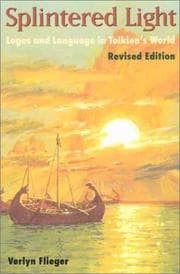
Splintered light
1983·196 pages
Scholarly analysis of Tolkien's Silmarillion and Lord of the Rings through Owen Barfield's linguistic theory of splintered light as metaphor for Middle-earth languages and history.
Owned
No reviews yet
Owned
Scholarly analysis of Tolkien's Silmarillion and Lord of the Rings through Owen Barfield's linguistic theory of splintered light as metaphor for Middle-earth languages and history.
About
Details
J. R. R. Tolkien is perhaps best known for The Hobbit and The Lord of the Rings, but it is in The Silmarillion that the true depth of Tolkien's Middle-earth can be understood. The Silmarillion was written before, during, and after Tolkien wrote The Hobbit and The Lord of the Rings. A collection of stories, it provides information alluded to in Tolkien's better known works and, in doing so, turns The Lord of the Rings into much more than a sequel to The Hobbit, making it instead a continuation of...
What's Inside
will contain mild spoilers
Sexual content
AI
No romantic or sexual content in this academic study
Violence & gore
AI
Analytical mentions of wars and peril in Tolkien's legendarium
Profanity
AI
No profanity or strong language present
Substance use
AI
No substance use depicted
LGBTQ+ Rep.
AI
No LGBTQIA characters or themes present
Religious content
AI
Central focus on creation light, logos, and fall-from-grace themes
Magic & witchcraft
AI
Recurring analysis of fantasy magic and mythic power in Tolkien
Occult / demonology
AI
No real-world occult content; fantasy mythology only
Political content
AI
No evidence found in available sources
Self-harm / suicide
AI
No evidence found in available sources
Abuse & suffering
AI
Thematic references to suffering and fall in the legendarium
Other
AI
No information found