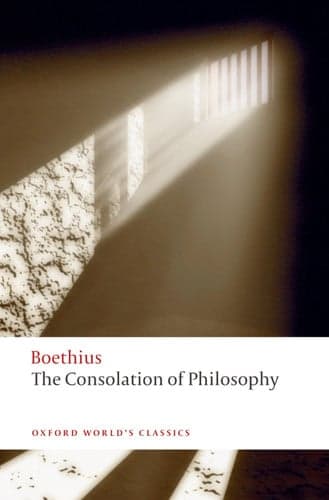
Imprisoned and facing execution, Boethius dialogues with Lady Philosophy on fortune, true happiness, and divine providence.
Owned
No reviews yet
Owned
Imprisoned and facing execution, Boethius dialogues with Lady Philosophy on fortune, true happiness, and divine providence.
About
Details
Boethius composed De Consolation Philosophiae in the sixth century A.D. while awaiting death by torture, condemned on a charge of plotting against Gothic rule, which he protested as manifestly unjust. Though a Christian, Boethius details the true end of life as the soul's knowledge of God, and consoles himself with the tenets of Greek philosophy, not with Christian precepts. Written in a form called Meippean Satire that alternates between prose and verse, Boethius' work often consists of a story...
What's Inside
will contain mild spoilers
Sexual content
AI
Brief philosophical talk of carnal pleasures as unfulfilling
Violence & gore
AI
References to unjust imprisonment and impending execution
Profanity
AI
No profanity or strong language present
Substance use
AI
No substance use depicted
LGBTQ+ Rep.
AI
No LGBTQIA+ representation present
Religious content
AI
Central focus on God, providence, the soul, and true happiness
Magic & witchcraft
AI
No magic or witchcraft present
Occult / demonology
AI
No occult or demonology content present
Political content
AI
Themes of political injustice, power, and fortune in public life
Self-harm / suicide
AI
No self-harm or suicide content present
Abuse & suffering
AI
Author's imprisonment, despair, and looming torture are central
Other
AI
No information found