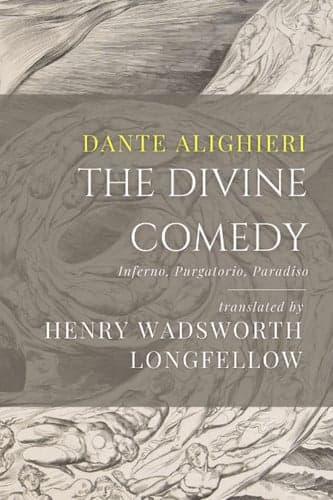
Dante journeys through Hell, Purgatory, and Paradise in this medieval epic poem depicting sin, punishment, redemption, and divine order.
Owned
No reviews yet
Owned
Dante journeys through Hell, Purgatory, and Paradise in this medieval epic poem depicting sin, punishment, redemption, and divine order.
About
Details
A new edition of Henry Wadsworth Longfellow's classic verse translation of Dante Alighieri's The Divine Comedy, including all three volumes of Dante's classic trilogy: Inferno, Purgatorio, and Paradiso. The Divine Comedy (or Divina Commedia) is an epic-length narrative poem, written between 1308 and 1320 in the vernacular Tuscan of the era, that is widely considered to be the pre-eminent work in Italian literature and a foundational work of the literary canon. The poem traces the narrator's jour...
More In This Series
View all books in this series
What's Inside
will contain mild spoilers
Sexual content
AI
Occasional references to lust and sexual sins with some graphic punishments depicted.
Violence & gore
AI
Graphic torture, dismemberment, and bodily punishments throughout Inferno.
Profanity
AI
Mild archaic language; no modern profanity.
Substance use
AI
No substance use depicted.
LGBTQ+ Rep.
AI
Same-sex acts shown as sins punished in Hell.
Religious content
AI
Central Catholic theology, saints, judgment, and afterlife structure.
Magic & witchcraft
AI
No fantasy magic or witchcraft present.
Occult / demonology
AI
Demons, devils, and infernal hierarchy feature prominently in Hell.
Political content
AI
Commentary on contemporary Florentine politics and Church corruption.
Self-harm / suicide
AI
Suicides punished in a dedicated circle of Hell with graphic imagery.
Abuse & suffering
AI
Extensive depictions of torment, confinement, and eternal suffering.
Other
AI
No information found