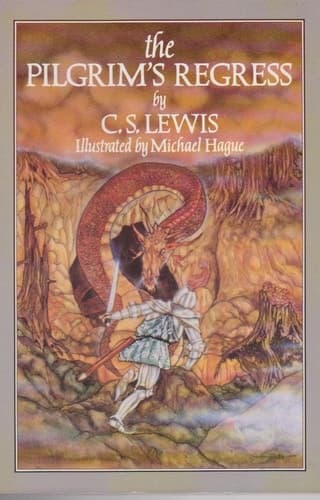
John's allegorical quest for an enchanting island embodying spiritual longing leads through philosophical encounters to Christian faith.
Owned
No reviews yet
Owned
John's allegorical quest for an enchanting island embodying spiritual longing leads through philosophical encounters to Christian faith.
About
Details
The first book written by C. S. Lewis after his conversion, The Pilgrim's Regress is, in a sense, the record of Lewis's own search for meaning and spiritual satisfaction -- a search that eventually led him to Christianity. Here is the story of the pilgrim John and his odyssey to an enchanting island which has created in him an intense longing 7mdash; a mysterious, sweet desire. John's pursuit of this desire takes him through adventures with such people as Mr. Enlightenment, Media Halfways, Mr. M...
What's Inside
will contain mild spoilers
Sexual content
AI
Fleeting encounters with figures representing sensual temptation
Violence & gore
AI
Mentions of dragons and giants in allegorical adventures
Profanity
AI
No evidence found in available sources
Substance use
AI
No evidence found in available sources
LGBTQ+ Rep.
AI
No evidence found in available sources
Religious content
AI
Central allegory of conversion to Christianity with figures like Mother Kirk
Magic & witchcraft
AI
Fantasy elements including dragons and giants
Occult / demonology
AI
No evidence found in available sources
Political content
AI
Critiques of various philosophies and worldviews through allegorical characters
Self-harm / suicide
AI
No evidence found in available sources
Abuse & suffering
AI
Journey includes the Valley of Humiliation
Other
AI
No information found