Literary Fiction
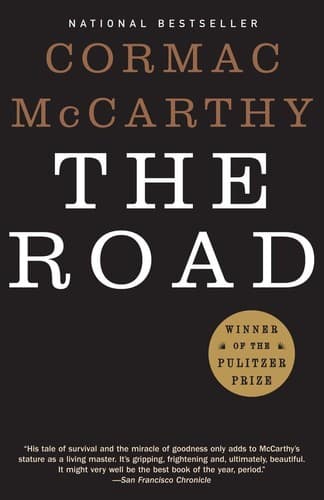
A father and son walk through a burned-out American landscape, pushing a shopping cart and trying to survive.
Owned
Owned
A father and son walk through a burned-out American landscape, pushing a shopping cart and trying to survive.
About
Details
Cormac McCarthy's tenth novel, The Road, is his most harrowing yet deeply personal work. Some unnamed catastrophe has scourged the world to a burnt-out cinder, inhabited by the last remnants of mankind and a very few surviving dogs and fungi. The sky is perpetually shrouded by dust and toxic particulates; the seasons are merely varied intensities of cold and dampness. Bands of cannibals roam the roads and inhabit what few dwellings remain intact in the woods.
Through this nightmarish residue ...
What's Inside
will contain mild spoilers
Sexual content
AI
Brief, implied sexual situations with no on-page explicit scenes. Implied rape and threats of sexual violence, including fear for child characters.
Violence & gore
AI
Post-apocalyptic brutality, cannibalism, corpses described in detail
Profanity
AI
Moderate use of strong language and profanities in dialogue.
Substance use
AI
No substance use depicted.
LGBTQ+ Rep.
AI
No LGBTQIA+ representation.
Religious content
AI
Recurring themes of carrying 'the fire' with subtle biblical and moral undertones.
Magic & witchcraft
AI
No witchcraft or occult elements.
Occult / demonology
AI
No evidence found in available sources.
Political content
AI
Subtle environmental catastrophe themes implying climate fiction elements.
Self-harm / suicide
AI
Frequent suicide ideation; on-page depiction of a character's suicide and discussions of it.
Abuse & suffering
AI
Central themes of child peril, cannibalism as cruelty, systemic suffering, and enslavement. Implied rape and threats of sexual violence, including fear for child characters.
Other
AI
No information found