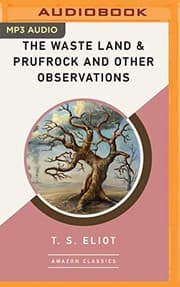
T.S. Eliot's modernist poetry explores despair, fragmentation, and human struggle in a post-war world.
Owned
No reviews yet
Owned
T.S. Eliot's modernist poetry explores despair, fragmentation, and human struggle in a post-war world.
About
Details
In “The Waste Land,” T. S. Eliot’s eulogy for all that is buried after World War I, April promises a flowering. But as the world mourns the spirit of a bygone era, what future can emerge from the cold, dead, infertile ground? Doubt and fear grip the narrator, too, in “The Love Song of J. Alfred Prufrock”―a self-examination of an anxious, overeducated man unable to act against feelings of paralyzing impotence. In his visionary poetry, including the fourteen enduring works collected here, Eliot br...
What's Inside
will contain mild spoilers
Sexual content
AI
Brief references to sexuality and desire; not explicit or central. Sexual context: brief allusion to unwanted advances; not detailed or central.
Violence & gore
AI
Minor allusions to death and decay; not graphic or detailed.
Profanity
AI
No evidence found in available sources.
Substance use
AI
Fleeting mentions of alcohol; not a central theme.
LGBTQ+ Rep.
AI
No evidence found in available sources.
Religious content
AI
Recurring biblical and spiritual allusions; integral to themes.
Magic & witchcraft
AI
No evidence found in available sources.
Occult / demonology
AI
Minor references to mysticism and tarot; not central.
Political content
AI
Cultural critique of modernity and post-war disillusionment.
Self-harm / suicide
AI
Subtle themes of despair and existential crisis; not explicit.
Abuse & suffering
AI
Themes of emotional and societal suffering; recurring imagery. Sexual context: brief allusion to unwanted advances; not detailed or central.
Other
AI
No information found.