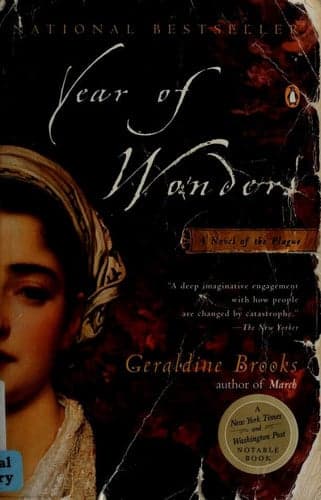
A young maid endures her Derbyshire village's self-quarantine during the 1666 bubonic plague, confronting loss, faith, fanaticism, and illicit love.
Owned
Owned
A young maid endures her Derbyshire village's self-quarantine during the 1666 bubonic plague, confronting loss, faith, fanaticism, and illicit love.
About
Details
This gripping historical novel is based on the true story of Eyam, the "Plague Village," in the rugged mountain spine of England. In 1666, a tainted bolt of cloth from London carries bubonic infection to this isolated settlement of shepherds and lead miners. A visionary young preacher convinces the villagers to seal themselves off in a deadly quarantine to prevent the spread of disease. The story is told through the eyes of eighteen-year-old Anna Frith, the vicar's maid, as she confronts the los...
What's Inside
will contain mild spoilers
Sexual content
AI
Illicit romantic affair and themes of repressed sexuality depicted.
Violence & gore
AI
Graphic plague deaths, gruesome violence, and painful suffering throughout.
Profanity
AI
No evidence found in available sources
Substance use
AI
Alcoholism and drinking shown as part of village life.
LGBTQ+ Rep.
AI
No evidence found in available sources
Religious content
AI
Clergy, prayer, faith crises, and religious rituals are central.
Magic & witchcraft
AI
Witch-hunting and sorcery accusations feature prominently.
Occult / demonology
AI
Demonic suspicions and occult fears arise in the crisis.
Political content
AI
Village quarantine decisions and community authority explored.
Self-harm / suicide
AI
Suicide and self-harm occur amid widespread despair.
Abuse & suffering
AI
Child death, physical abuse, traumatic births, and violence against women.
Other
AI
No information found